Inset
In inset cabinetry, the doors and drawer fronts sit inside the face frame, flush with the front of the cabinet. It is the most traditional look and the most demanding to build, because every door has to fit its opening with a tight, even reveal. That precision is exactly why people love it and why it costs the most. Inset reads as furniture. It suits classic and transitional kitchens and homes where the detail is meant to be seen.
Frameless
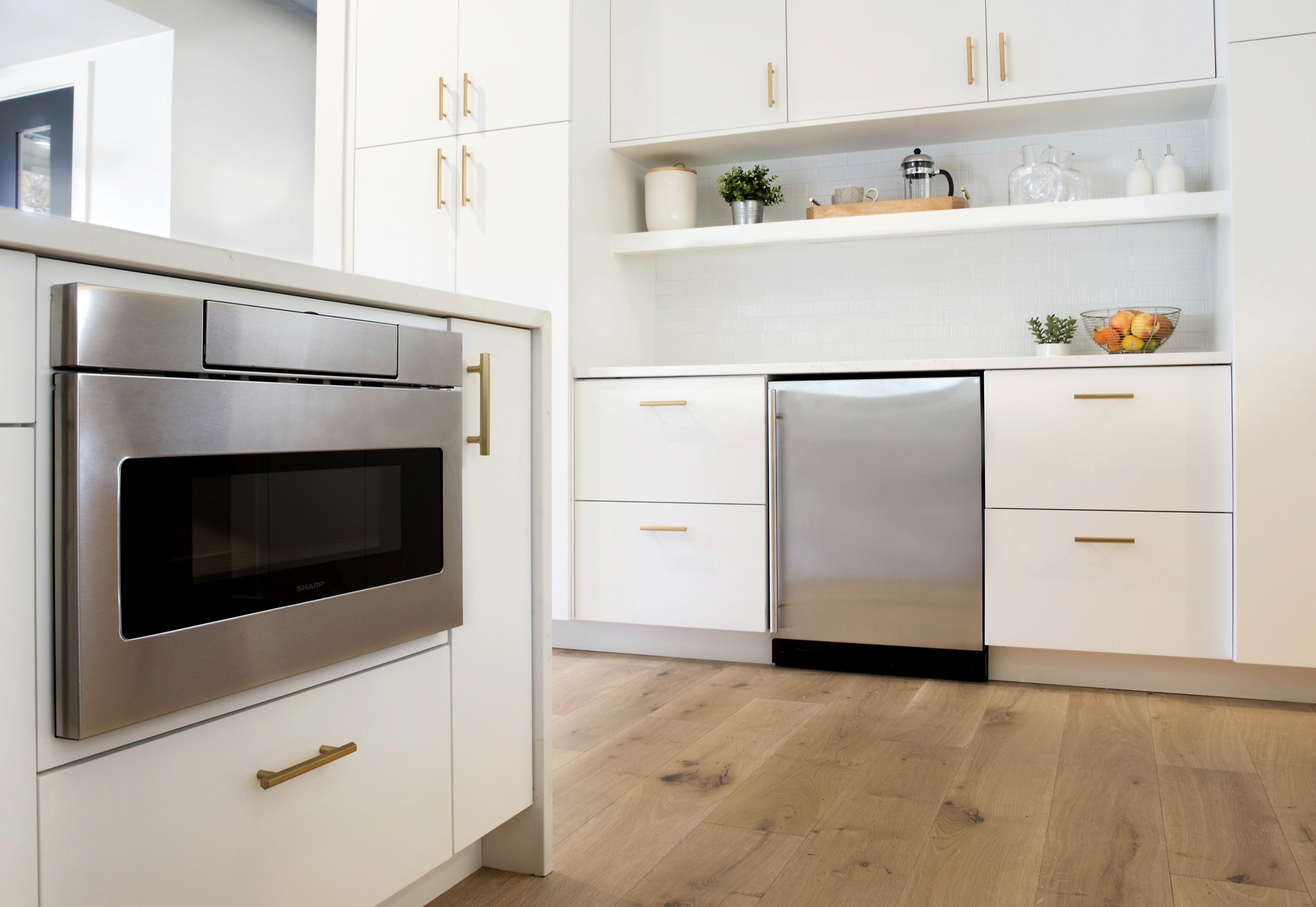
Frameless cabinetry, also called full-access, drops the face frame. Doors mount to the box itself, which gives you slightly wider openings and a bit more usable interior space. The look is cleaner and more contemporary, and the storage is easy to reach. For modern kitchens and for anyone who wants to maximize what fits inside, frameless is a strong default.
European
European construction is a refined frameless approach aimed at a clean, contemporary result. Think flat fronts, minimal reveals, and a continuous, quiet surface. If your kitchen is modern and you want it to feel calm and uninterrupted, this is the direction. It gives a designer the clean canvas that style depends on.
How to choose
Start with the house. A period home or a traditional interior tends to want inset. A modern or transitional space is happy in frameless or European. Then weigh storage and budget. Frameless gives a little more room inside for a little less money. Inset gives the tailored look for more. There is no wrong answer, only the one that fits your kitchen and your eye. If you are unsure, that is what the design conversation is for.